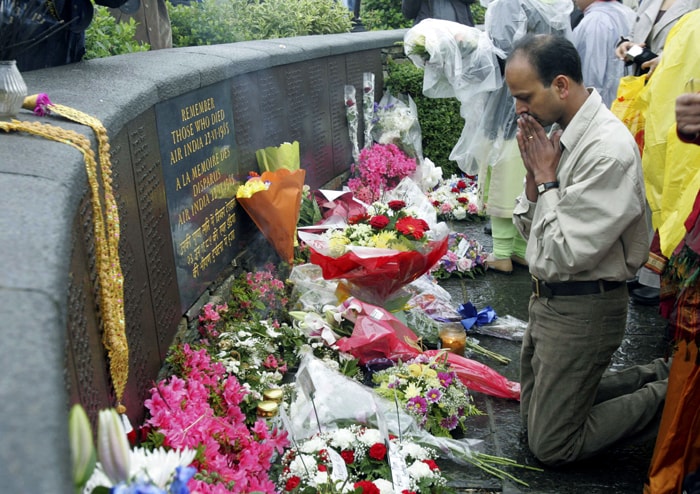
A fresh controversy has erupted around the Air India Flight 182 Kanishka bombing, with victims’ families raising the alarm over what they describe as a possible decision by the Royal Canadian Mounted Police (RCMP) to scale back its investigation into the 1985 terror attack and potentially place the case in an “inactive” status.
The development has stunned families who have spent more than four decades seeking answers over the bombing that killed 329 people, including 268 Canadian citizens.
Canadian authorities continue to describe the attack as the deadliest terrorist attack in the country’s history. The latest warning comes from Sanjay Lazar, a family member of victims and chairman of the Kanishka Foundation, who has written to Canadian Prime Minister Mark Carney strongly opposing any move to wind down the investigation in a powerful emotional letter accessed by NDTV. For the families, that possibility has reopened some of the deepest wounds of a tragedy that has never really left them. The victims included Canadians, Indians and citizens of other countries, with the overwhelming majority being Canadian citizens. The attack remains Canada’s deadliest act of terrorism. It is now a political and public question about how Canada intends to deal with one of the darkest chapters in its modern history. The Air India bombing is not an obscure historical crime. It remains central to Canada’s terrorism history and to the evolution of its national security system.
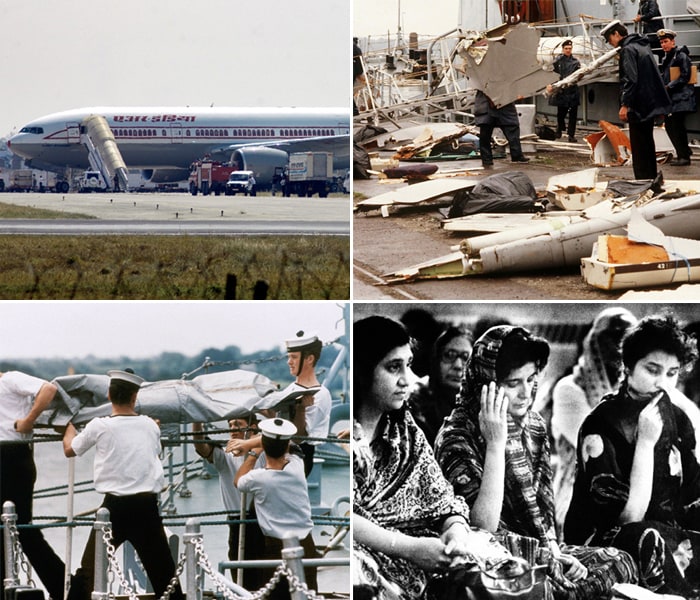
The issue has therefore moved beyond an internal police investigation. The development has stunned families who have spent more than four decades seeking answers over the bombing that killed 329 people, including 268 Canadian citizens. Lazar says he lost his father, mother and baby sister in the June 23, 1985 tragedy and has spent decades pursuing justice. In his September 16 letter, he describes being deeply shocked after a September 12 meeting in Toronto at which families were briefed on the future of the investigation. Air India Flight 182 was flying from Montreal towards London on June 23, 1985, when a bomb exploded over the Atlantic Ocean off the coast of Ireland. All 329 people aboard were killed. Prime Minister Carney himself marked the 41st anniversary in June 2026 by remembering the 329 victims and describing Flight 182 as the deadliest terrorist attack in Canadian history.
The letter says families were told of a possible reduction in the task force and a move towards making the case inactive.
NDTV has exclusively accessed details of a meeting that was organised with victim families at the request of RCMP top brass earlier this month in which the decision was conveyed.
Lazar describes the meeting as the first family briefing in 20 years since the criminal trial.
He says relatives were distressed by what they heard, with emotions running high during the meeting.
That is now at the centre of the dispute. Another important issue raised by Lazar concerns consultation. The letter also recalls assurances given to families by former Canadian Prime Minister Stephen Harper.
Because the existing investigation has reached its limits, this is perhaps the central demand emerging from the families’ protest: no surrender.
One of the most contentious issues raised by Lazar is the reported suggestion that families should provide fresh information for investigators to pursue. For relatives who lost entire families, the legal outcome left a profound sense of unfinished business. But the underlying concern is clear: if evidence was lost, witnesses died and investigative opportunities disappeared over the years, should that history itself be a reason to stop-or a reason to keep looking?
At almost the same time, another bomb connected to the same conspiracy exploded at Tokyo’s Narita airport, killing two baggage handlers. The two incidents became part of a sprawling international investigation. The scale of the Air India attack was enormous. It was not only a devastating loss of life but also an attack that exposed serious shortcomings in Canada’s intelligence, security and law-enforcement systems. The later public inquiry led by former Supreme Court Justice John Major examined what went wrong before and after the bombing. Canada’s government has acknowledged that the inquiry identified major failures in the country’s security and intelligence response. It is about what happens now. The families say this came as a profound shock. That history makes the possibility of scaling back the investigation especially significant. For the families, the obvious question is whether an investigation that has lasted four decades should now depend primarily on victims’ relatives producing information that investigators have not themselves uncovered. Their argument is not that every investigation must continue indefinitely regardless of evidence. The Air India investigation has a long and complicated history. Canada’s own Commission of Inquiry later described the tragedy as the product of a series of failures surrounding the country’s security and intelligence systems. The inquiry examined the handling of threats, information-sharing between agencies, witness protection and the post-bombing investigation. There were criminal prosecutions, but the legal outcome did not provide the broad accountability many families had expected. The Commission recorded that no other people were subsequently charged. Lazar’s letter revisits several long-standing grievances. It alleges that the investigation was affected by missing evidence, deleted surveillance recordings and the deaths or threats involving witnesses. The letter argues that these failures contributed to the inability to secure convictions against two of the accused. These claims form part of the family’s case for continuing the investigation and should be distinguished from findings established through individual criminal proceedings or official inquiries. The letter argues that the Air India tragedy involves multiple families and organisations with long-standing involvement in the case. The implication is that consultation with one group of relatives cannot necessarily settle the views of everyone affected by the bombing. This could become an important issue if the Canadian government formally considers changing the status or structure of the investigation. The families are also proposing a concrete alternative. He wants the reward reinstated, increased and accompanied by a renewed public appeal for information. The proposal reflects the families’ broader position: if investigators believe existing leads have been exhausted, Canada should try to generate new information rather than simply reduce the investigation. Lazar is also asking the Canadian government to consider a fresh investigative approach. His letter argues that if the existing RCMP structure believes it cannot make further progress, authorities should consider whether another investigative team or additional expertise could take the case forward. He calls for stronger efforts by Canadian policing and intelligence authorities to identify those responsible. Now the appeal has moved to Prime Minister Mark Carney. The letter has also been copied to India’s Prime Minister Narendra Modi, the foreign ministers of both countries, Canada’s national security minister, the Attorneys General of Canada and British Columbia and senior RCMP officials. The RCMP, meanwhile, has publicly acknowledged that the investigation exposed significant weaknesses in intelligence-sharing, coordination between agencies and support for victims’ families. That makes the current controversy particularly striking. The question is not simply whether investigators have another lead. It is whether a case involving hundreds of victims and decades of investigative history should be allowed to fade into administrative inactivity without a broader examination of what remains unresolved. For Lazar and other families who continue to campaign for answers, the answer is unequivocal. His letter formally rejects any move to wind down the investigation and calls for it to continue, including the possibility of renewed investigative efforts and a fresh search for information. Forty-one years after Kanishka disappeared into the Atlantic, the families are once again asking Canada the question they have been asking for generations: What happened to the search for justice-and why should it stop now?
Because the RCMP itself has previously described the Air India investigation as one of the largest and most complex investigations in Canadian history, the issue becomes particularly sensitive. The families’ latest concern is not about what happened in 1985. In a 2025 retrospective marking the 40th anniversary, the force said hundreds of officers had worked on the case, with investigators travelling across countries, examining evidence, reconstructing the aircraft and interviewing witnesses. Inderjit Singh Reyat was convicted in connection with the explosions, while two other accused were acquitted in 2005. Lazar’s letter points out that the Canadian government and RCMP announced a $1-million reward in 1995 for information relating to the perpetrators and says it remains unclaimed.
The RCMP indicated at the Toronto meeting that it was considering reducing the size of the Air India task force and effectively moving the investigation into inactive status, according to Lazar’s letter. In his letter, Lazar says the message that families should come forward with new leads was particularly painful after decades of investigation. There were two criminal trials, according to the Major Commission’s final report. Lazar says Harper had assured representatives that Canadian authorities would continue working to identify those responsible and pursue the case to its logical conclusion.
Rather, they are demanding that authorities establish whether all reasonable investigative avenues have genuinely been exhausted before the case is effectively put aside. Lazar points to separate representation before the Justice Major Commission involving the AICCA, pilots’ representatives and numerous families.