
President Donald Trump’s war against Iran is stretching the limits of U.S. aircraft carriers and leaving the western Pacific without one of the key American warships as China shows more signs of aggression.
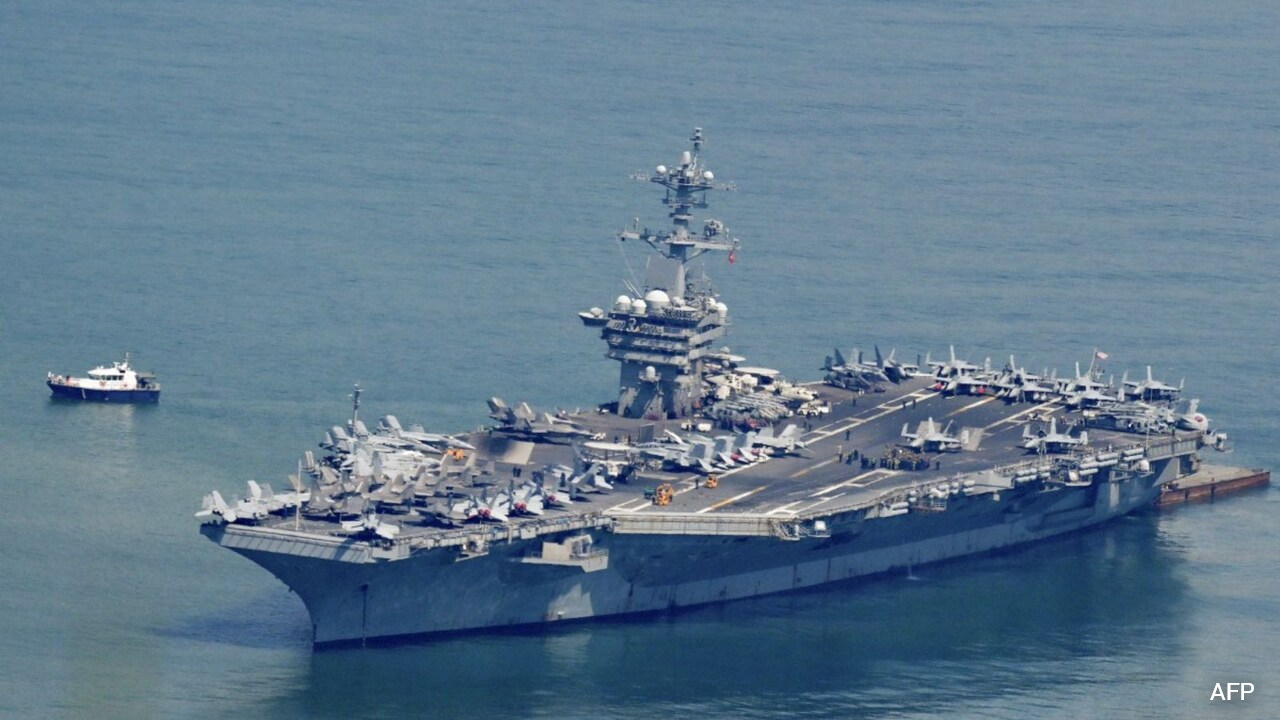
The USS George Washington is departing the Pacific and expected to replace the USS Abraham Lincoln in the Middle East amid growing concerns about mental health and supply issues aboard the long-deployed carrier.
The lack of a US carrier in the Pacific may be short-lived if the Navy deploys another in the next couple of months. But it shows how the open-ended operations with Iran are running some American sailors ragged, analysts say, while the Trump administration further retreats from the Asia-Pacific region and focuses on the Western Hemisphere. “They would just prefer that countries in the region decide that China is the bigger power and the US is not able to guarantee their security anymore.
Because an American aircraft carrier has left the region, no one expects China to invade Taiwan.
“The administration says that the Pacific is supposed to be the most important behind the Western Hemisphere,” said Greg Poling, director of the Southeast Asia Program at the Center for Strategic and International Studies. Instead, the US is “doing the exact opposite” of its previously expressed goal of pulling out of the Middle East. American allies in the Pacific are unsettled over the unpredictability of the Republican administration, Poling said, while Beijing “is quite happy with US distraction, with the frustration of US allies and partners. But the carrier’s absence gives the Chinese another opportunity to show its strength, said Bryan Clark, a former Navy submariner who is a defense analyst at the Hudson Institute. “They’re using this as part of the narrative to demonstrate to the Philippines, to Japan, to Indonesia and others that the US is not the big dog in the western Pacific anymore,” Clark said. Evan Sankey, a policy analyst at the Cato Institute who focuses on U.S. policy toward China, said aircraft carriers provide psychological assurance to US allies. The absence of carriers in the region, he said, “adds to the general sense that the US is distracted by events in the Middle East. Warships and their crews can only handle so much, said Robert Farley, who teaches national security and diplomacy at the University of Kentucky and often writes about aircraft carriers.
